
AI-Driven Test Automation Improve Accuracy
AI-driven test automation is transforming software and AI model testing by significantly improving accuracy, efficiency, and reliability. Traditional testing methods often rely on manual processes or rule-based automation, which can be prone to human errors, inconsistencies, and limitations in handling complex scenarios. AI-powered automation introduces intelligent decision-making, adaptive learning, and continuous improvement, enabling more precise and comprehensive testing. As AI systems become more advanced, their ability to identify errors, predict failures, and optimize testing workflows will lead to higher accuracy in test execution and validation.
One of the primary ways AI-driven test automation improves accuracy is by reducing human error. Manual testing processes often involve repetitive tasks, which can lead to fatigue and oversight. Even with scripted automation, test cases may fail to cover all possible edge cases or dynamic changes in software behavior. AI-driven automation continuously learns from past test results, adapts to new patterns, and refines its testing strategies, reducing the likelihood of missing critical defects. This ensures that software applications and AI models perform consistently under various conditions.
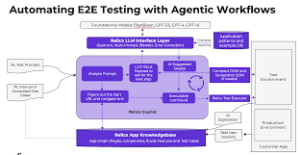
AI-driven automation also enhances test coverage, which directly impacts accuracy. Traditional test automation relies on predefined test cases, which may not capture every possible input combination or system behavior. AI can analyze vast amounts of data, generate new test scenarios, and identify potential edge cases that human testers might overlook. For example, End-to-end testing platform for Al applications can simulate real-world user interactions, varying input conditions to test system responses across multiple environments. This comprehensive approach ensures that even rare or unexpected issues are detected and addressed before deployment.
How Will AI-Driven Test Automation Improve Accuracy?
Another significant advantage of AI-driven test automation is its ability to detect patterns and anomalies more effectively than traditional methods. AI models can analyze historical test data, identify recurring issues, and predict potential failures before they occur. This predictive capability helps teams address vulnerabilities early in the development cycle, preventing defects from reaching production. Machine learning algorithms can also differentiate between genuine issues and false positives, reducing the number of unnecessary alerts and improving the overall accuracy of test results.
Self-healing test automation is another way AI-driven testing improves accuracy. Traditional test scripts can break when there are minor changes in an application’s user interface or system behavior. AI-powered automation tools use computer vision and natural language processing to recognize changes and adjust test scripts automatically. This self-healing capability ensures that tests remain valid without manual intervention, reducing maintenance efforts and improving long-term accuracy in test execution.
AI-driven automation also improves the accuracy of performance testing by dynamically analyzing system behavior under different loads and stress conditions. AI can simulate thousands of concurrent users, monitor system response times, and detect performance bottlenecks with high precision. Unlike traditional performance testing, which may require manual adjustments and assumptions, AI-driven automation continuously optimizes test parameters to provide more accurate and realistic performance insights.
As AI-driven test automation evolves, its ability to enhance accuracy will continue to grow. By leveraging machine learning, predictive analytics, and self-healing capabilities, AI-driven testing reduces human errors, expands test coverage, detects anomalies, and improves performance analysis. Organizations that integrate AI-driven automation into their testing processes will benefit from more reliable, high-quality software and AI models, ensuring better user experiences and operational efficiency.