
shaping the future of Flexible printed circuit manufacturers
Advancements in technology and materials are continuously shaping the future of flexible printed circuit (FPC) manufacturers, driving innovation and opening up new possibilities in various industries. These advancements are revolutionizing the way FPCs are designed, manufactured, and utilized, paving the way for more flexible, lightweight, and high-performance electronic devices.
One of the key advancements shaping the future of flexible printed circuit manufacturers is the development of flexible substrates with improved mechanical and electrical properties. Traditional materials like polyimide and polyester are being enhanced with additives and coatings to increase flexibility, durability, and resistance to harsh environmental conditions. Additionally, the emergence of novel substrate materials such as liquid crystal polymer (LCP) offers superior thermal stability and signal integrity, enabling the production of FPCs for high-frequency applications.
Miniaturization and integration are driving forces behind the advancement of FPC technology. Manufacturers are leveraging advancements in microelectronics and nanotechnology to shrink the size of components and increase the density of circuits on flexible substrates. This trend towards miniaturization enables the creation of smaller, lighter, and more compact electronic devices, making FPCs ideal for applications where space is limited, such as wearable electronics, medical devices, and automotive interiors.
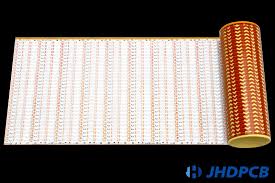
What advancements are shaping the future of Flexible printed circuit manufacturers?
The integration of additive manufacturing techniques, such as 3D printing, is another significant advancement shaping the future of FPC manufacturing. Additive manufacturing allows for the direct fabrication of complex FPC designs with intricate geometries, reducing production time and enabling rapid prototyping and customization. This technology also facilitates the integration of sensors, antennas, and other functional elements directly onto flexible substrates, streamlining the manufacturing process and enhancing product performance.
Advancements in conductive inks and printing technologies are driving innovation in FPC manufacturing, enabling the deposition of conductive traces and components on flexible substrates using inkjet, screen printing, or aerosol jet printing techniques. These additive manufacturing methods offer greater design flexibility, scalability, and cost-effectiveness compared to traditional etching and photolithography processes. Moreover, the development of stretchable and conductive inks enables the creation of FPCs that can conform to curved surfaces and withstand mechanical deformation without compromising electrical performance.
The integration of advanced sensing and communication technologies is transforming FPCs into intelligent and interconnected systems capable of collecting, processing, and transmitting data in real-time. This convergence of flexible electronics with sensor networks, wireless communication protocols, and Internet-of-Things (IoT) platforms opens up new opportunities for applications such as smart textiles, flexible displays, and environmental monitoring systems. By embedding sensors and wireless connectivity directly into FPCs, manufacturers can create smart devices that are more responsive, autonomous, and adaptive to their environment.
Advancements in flexible display technology are driving demand for FPCs with high-resolution, bendable, and foldable displays that can be integrated into a wide range of consumer electronics, including smartphones, tablets, and wearable devices. Manufacturers are developing innovative display technologies such as organic light-emitting diodes (OLEDs), thin-film transistors (TFTs), and microLEDs to achieve brighter, sharper, and more energy-efficient displays on flexible substrates. These advancements are fueling the growth of the flexible display market and driving the adoption of FPCs in next-generation electronic devices.
In conclusion, advancements in materials, miniaturization, additive manufacturing, conductive inks, sensing technologies, and flexible displays are shaping the future of flexible printed circuit manufacturers. By embracing these technological innovations, manufacturers can unlock new opportunities for product innovation, performance optimization, and market expansion. As FPCs continue to evolve and become more versatile, reliable, and cost-effective, they will play an increasingly integral role in powering the next generation of electronic devices and shaping the future of the electronics industry.