
flexible PCBs be used in communication devices
Printed circuit boards (PCBs) connect components and devices to ensure that they function as intended. They can be used in a variety of ways and have become indispensable in modern electronic devices such as mobile phones, automobiles and medical equipment.
Flex PCBs, also known as flexible pcb, are a type of printed circuit board that can be bent and twisted. They are constructed from a dielectric substrate film material that can be folded or bended without breaking. Conductive material traces are etched into the surface of the substrate and covered in a protective coverlay or coating to prevent damage.
In comparison to rigid PCBs, flex PCBs are more compact and can be used in tight spaces that cannot accommodate larger, bulkier boards. In addition, they are more resilient against vibration and abrasion than traditional circuits, making them ideal for use in motor vehicles. They also offer substantial weight savings, saving on vehicle fuel efficiency and range.
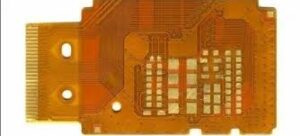
Can flexible PCBs be used in communication devices?
The history of flexible circuit boards begins with flat foil conductors laminated to insulating materials in the 1940s by Albert Hanson and Paul Eisler. They laid the groundwork for future advancements in PCB technology. Since then, the technology has evolved significantly and now incorporates a wide range of features to meet today’s requirements.
Flexible PCBs are constructed in either a subtractive or additive process. Subtractive processes use screen printing or photo imaging to remove areas of the copper plating, creating a pattern for the conductive traces. In contrast, additive processes start with a bare dielectric layer and add metal traces to it. Both methods have advantages, but the subtractive method is more robust and allows for a greater selection of final product configurations.
There are several different types of flex PCBs, including single-sided, double-sided, and multilayer circuit boards. Single-sided flex PCBs are ideal for dynamic flex applications, as they have one conductive layer and SMT lands are accessible from one side only. Double-sided flex PCBs have two conductive layers and are suitable for more complex, higher density applications. In some cases, these circuits are used with stiffeners for additional stability.
Flex PCBs are often categorized by class, with class III being the most expensive and suitable for high-reliability electronics that need to perform continuously in critical conditions. These include products and equipment that cannot be downed for maintenance and those that need to perform reliably at the time of demand, such as flight control systems or life support equipment.
As the technology behind flexible PCBs continues to evolve, several trends are emerging that could further expand their applications and capabilities. One such trend is the integration of flexible PCBs with other advanced materials and technologies. For example, researchers are exploring the use of flexible PCBs in conjunction with organic semiconductors to create flexible, bendable displays and sensors. These hybrid systems could lead to new types of electronic devices that are not only flexible but also stretchable, opening up possibilities in areas like wearable technology, smart textiles, and bioelectronics.
Although a flex PCB can withstand significant amounts of bending and twisting, excessive flexing can cause damage to the circuit. This is why manufacturers must carefully consider how their products will be used and select the most appropriate type of flex circuit.