
Design PCB Stiffeners
PCB stiffeners are an important part of rigid-flex and flexible printed circuit boards (Flex PCBs) because they help provide stability to the traces and components. Stiffeners add strength and rigidity to specific areas of the circuit board, helping it avoid excessive bending or flexing that could cause damage to copper traces and solder joints. In addition, they protect the integrity of the board by helping to maintain its shape in the event that it encounters stress or a mechanical shock.
To design a PCB stiffener, first, the designer needs to determine the stiffness requirements for the flex circuit. This can be determined by evaluating the size and weight of the circuit board, its operating environment, and any required certifications. The stiffness requirements can then be used to select a suitable stiffener material. A stiffener can be made from a variety of materials, including FR4, polyimide, aluminum, and stainless steel. Each type of material has its own advantages and disadvantages.
FR4 is a common choice for stiffeners because it offers flexibility and durability. It is also easy to process and affordable. It can be cut with standard tools, making it an ideal choice for a wide range of applications. However, FR4 is not as strong as other types of material for pcb stiffener, and it can crack under a high load or stress concentration. Alternatively, some designers use a polyimide stiffener because it is durable and can be cut into different shapes. It is also resistant to chemicals and has a good temperature tolerance.
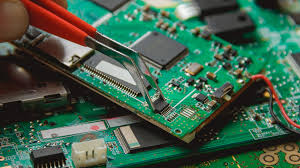
How to Design PCB Stiffeners
Another option for PCB stiffeners is to use a stainless steel or aluminum plate. These metals offer higher levels of rigidity and are compatible with both flex and rigid-flex circuits. They can be shaped to fit the specific components and connectors on the circuit board, and they are easy to process. These metals can be cut with shears and nibblers, and they can be etched to remove impurities. They are also very cost-effective, and they can be cut to any length.
Besides adding rigidity to the component area, PCB stiffeners can serve other functions. For example, they can be used to increase the thickness of the contact fingers on ZIF connectors for insertion-type connections, which require a specific thickness specification. They can also prevent bending in areas that are likely to be subjected to vibration or abrasion.
When choosing a PCB stiffener, it is important to consider the manufacturing process and operating environment in which the board will be used. The stiffener material should be able to withstand the stresses and strains that will occur during the assembling and testing phases of the circuit board. The stiffener should be positioned in an area that is not susceptible to flexing or bending, and it should be thick enough to provide adequate rigidity. Additionally, the stiffener should be a non-conductive material to prevent shorting between conductive traces and the metals on the circuit board. Finally, the stiffener should be coated to prevent corrosion or abrasion.